
OPPDAL
The energy society of the future
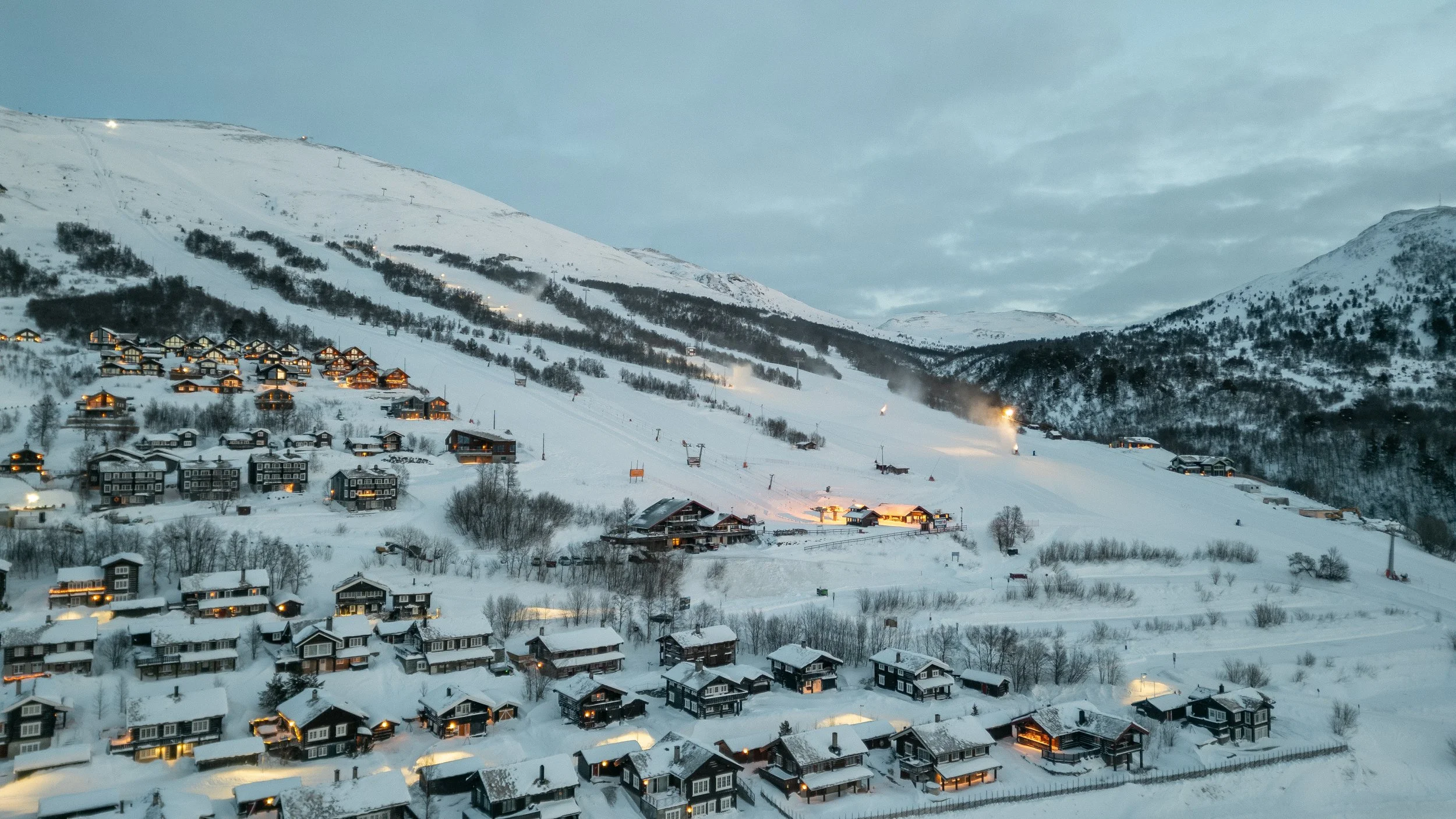
How can energy solutions be planned as part of an entire development area? In Vangslia in Oppdal, the pilot has investigated how holiday homes, commercial areas and ski resorts can be seen in context to better utilize energy and infrastructure.
The work has provided concrete recommendations on shared heat supply, local energy production and the organization of ownership and operation. The experiences provide a useful knowledge base for developers, municipalities and other stakeholders who want to make better energy choices early in the planning process.
About the pilot
The starting point for the pilot is the planned development of Vangslia. Alpinco is one of Norway's leading companies in alpine resorts and destination development, and owner of the alpine areas in Oppdal. By 2035, Alpinco's ambition is to build approximately 1,000 ground-level warm beds, and the project in Vangslia is part of an important development project to achieve this goal. Here, new holiday homes and commercial areas will be included in an area with existing alpine resorts and clear seasonal variations in energy use. The question has been how the development can have an energy supply that works well both on cold winter days and when the area is less used.
The pilot is structured into four sub-projects:
Energy needs and grid capacity: How much electricity does the planned development need, and what is there room for in the existing grid?
Energy solutions in buildings: What benefits can solar cells, energy storage and small wind turbines provide under local conditions?
Shared energy supply: How can heat be produced and distributed between buildings, and how can the solution be expanded over time?
Ownership and operation: Who will invest in, own and operate the energy facilities, and how can responsibility and risk be distributed?
The multidisciplinary energy contractor Energipartner has prepared proposals that highlight these issues and identify measures for more efficient energy use and sustainable development. The proposals are also intended to form the basis for practice in similar developments in the future.
Relevance for SOURCE
In Norway, holiday home development has taken over large areas of nature and has had significant consequences for ecosystems and the environment. This creates a challenging dilemma for developers and local communities: How to develop attractive leisure areas without increasing the burden on nature. Alpinco and other players are at the heart of this challenge through the plans for development in Vangslia.
The project shows how energy can be part of holistic area development. The choice of heating, the location of buildings and technical facilities, the pace of development and organization all influence each other. Therefore, it is useful to consider these issues collectively and early on.
The transfer value from the pilot to other relevant development projects lies in the way the pilot is structured; mapping needs, examining local conditions and clarifying responsibilities before choosing solutions. This is also relevant outside the holiday home sector, although each area needs its own assessments.
Ambitions
The ambition has been to develop an energy concept that can be adapted to both Vangslia and other areas with similar needs. The concept will contribute to:
make better use of existing power grids and limit the load when many people use electricity at the same time
combine energy-efficient buildings with local energy production and shared heating solutions
adapt investments and capacity to a development that takes place in several stages
provide clear responsibility for financing, ownership, operation and maintenance
create greater predictability for the developer, municipality, energy partners and future users.
The pilot will thus contribute both to better decisions in Vangslia and to learning that other development projects can use.
The process
EnergiPartner has compiled the work in a final report from May 2026. The study combines analyses of electricity consumption, calculations for planned development, assessments of local energy sources and comparison of different models for ownership and operation.
Dialogue with the grid company Tensio has been important in clarifying connection options. Information about the ski resort's consumption and future needs has also made it possible to see new and existing activity in context.
Different solutions have been assessed against local conditions, expected benefits, costs and the possibility of phased development. The work has also clarified which alternatives appear to be less suitable for Vangslia.
The report provides recommendations for further planning. Detailed design, ground investigations and final clarifications regarding investments and organization remain before the solutions can be implemented.
Result
The pilot has given a clearer picture of what is possible in Vangslia, which solutions should be developed further, and which clarifications need to be made before development. Five findings in particular have value for other projects:
Early dialogue clarifies the scope for action in the power grid
The grid company Tensio confirmed in connection with the investigation that there was capacity for the requested development. However, the capacity was not reserved and must be clarified again when the project has progressed further.
Available capacity also does not mean that the connection will be free of charge. The report currently estimates around two million kroner for necessary local network measures, depending on the final solution.
For other developers and municipalities, the learning point is to investigate the specific project together with the grid company early on. This provides a better basis for planning costs, progress, and location of grid infrastructure.
Prepare for consumption peaks
The power grid must be able to handle periods of highest simultaneous consumption. Therefore, it is not only the total energy use throughout the year that matters, but also whether heating, hot water and electric vehicle charging require a lot of electricity at the same time.
For the modelled building, calculations show that heat pumps can reduce the peak simultaneous electricity demand by about 26 percent compared to direct electric heating. Storing heat for later use can reduce the peak further. Combined with better insulation and tightness, a calculated alternative shows about a halving compared to a reference building at TEK17 level with direct electric heating.
These are calculated possibilities, not measured results. Nevertheless, they show why building quality, heating and consumption management should be considered together.
Joint heating supply recommended for Vangslia
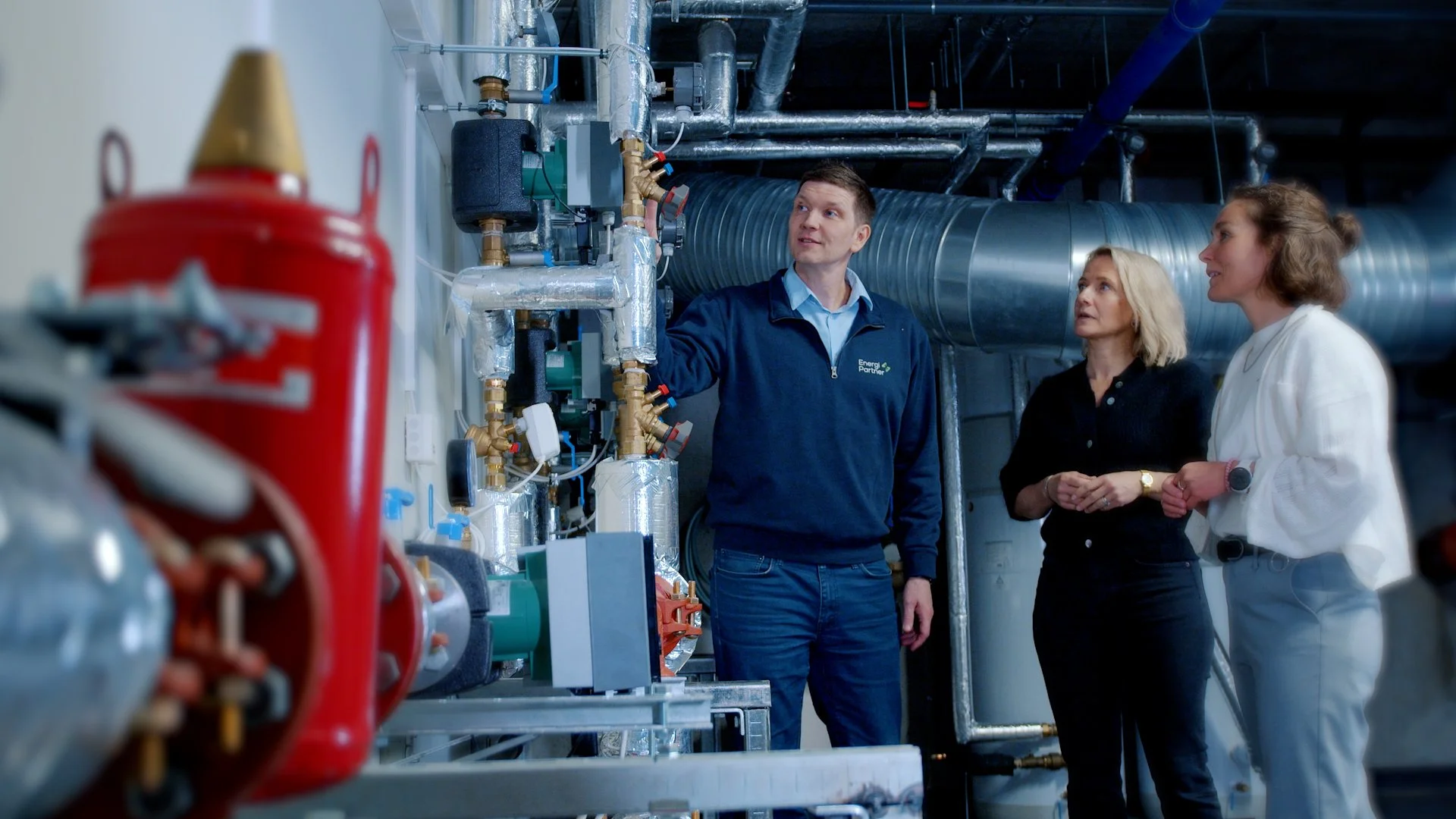
The report recommends a shared energy center with heat pumps that extract heat from the mountain. The heat can be distributed to the buildings through a shared pipe system, while hot water tanks in the buildings make it possible to store heat and use it when needed.
The solution is considered to be better suited for Vangslia than separate heating systems in each building. It allows for coordinated operation and can be expanded as new construction phases are added.
For developers, consultants and contractors, this means that common solutions should be considered before each building is designed. The municipality's planning work can facilitate this by allocating space for energy centers, energy wells and pipelines early on.
Local conditions must guide technology choices
Solar cells are recommended as part of the energy concept. Calculations show that south-facing roofs provide the highest annual production among the alternatives investigated. Solar cells can reduce the need for purchased electricity throughout the year, but contribute little when electricity demand is greatest in winter.
Small wind turbines, however, are considered unsuitable for this project, due to low expected production and weak profitability.
Experience has shown that technologies must be evaluated based on what they can actually contribute on site. For architects and developers, it is also useful to consider solar energy early, so that roof surfaces and building design can be adapted.
Ownership and operation are part of the energy solution
The pilot compares three current ways of organizing energy facilities: that the developer owns and purchases operating services, that an external energy supplier invests and delivers energy as a service, or that several players establish a joint company.
The alternatives provide different distributions of investment, risk and control. The report does not identify one model as best for everyone, but recommends further clarifications with potential energy partners.
For other projects, the learning point is to clarify the organization in parallel with the technical solutions. Who pays, who is responsible for maintenance, and how to handle slower-than-planned development are important for whether the solution is feasible and good over time.
Overall, the pilot has provided a concrete basis for decision-making for the further development of Vangslia. For other stakeholders, the work shows the value of planning construction, energy supply and operation as a whole – and making necessary clarifications while it is still possible to influence the solutions.

Caption
Caption
Caption
Caption
The pilot project is a collaboration between: SOURCE, TrønderEnergi, Oppdal Municipality, Alpinco and EnergiPartner.