
From leisure to permanent residence – pilot Åfjord
If cottage communities are to succeed in the future, they must attract young adults who want to live and work there all year round. This requires new, exciting living environments that can compete with life in the city. Åfjord municipality has started an innovative project aimed at young adults under the age of 28. Therefore, the municipality has challenged SOURCE to come up with suggestions for how Åfjord can develop an attractive and future-oriented residential area for young adults.
From traditional plots to new solutions
The pilot started in a downtown area that was originally zoned for ten single-family homes on large lots. Instead, the municipality wanted to explore new ways of living: What if we developed housing specifically tailored to young adults – with lower prices, greater flexibility, community, and proximity to local communities and work?
To develop ideas in the early stages, a creative sprint was organized in October 2024. Åfjord Municipality, Åfjord Utvikling AS and professional partners from SOURCE participated. Through site visits and group work, the participants created personas – thinking of examples of young adults who could live in the area – and used these as a basis for shaping new housing concepts. The result was three different, but complementary approaches to how Åfjord can create attractive living environments for young adults.
About Åfjord Municipality
Åfjord municipality is located at the edge of the Fosen Peninsula in Trøndelag, has 4,350 inhabitants and approx. 2,100 cottages. The municipality has a strong coastal culture where natural resources form the basis for important industries such as fishing, aquaculture, but also agriculture and construction. Today, Åfjord is focusing on developing new industries within seafood, tourism and renewable energy.
Concept 1 – Community-oriented living environment
The concept is based on the question: What does it take for young adults to actually want to live here? A central idea is to involve the target group in the development process to ensure that the solution meets real needs.
Furthermore, it is proposed to group the homes and common functions together to make better use of the area and strengthen the sense of community, and to break with the classic housing estate design. The area will have a clear “heart” – a greenhouse or winter garden – that will function as a natural gathering point. Such common spaces create meeting places all year round and facilitate small collaborative projects, such as growing vegetables or building something together.
The concept also emphasizes flexibility and cost control. The homes can be expanded as needs change, and shared solutions such as storage rooms and carports are shared between residents. The result is a community-oriented living environment where both organization and design promote collaboration, well-being and social belonging.
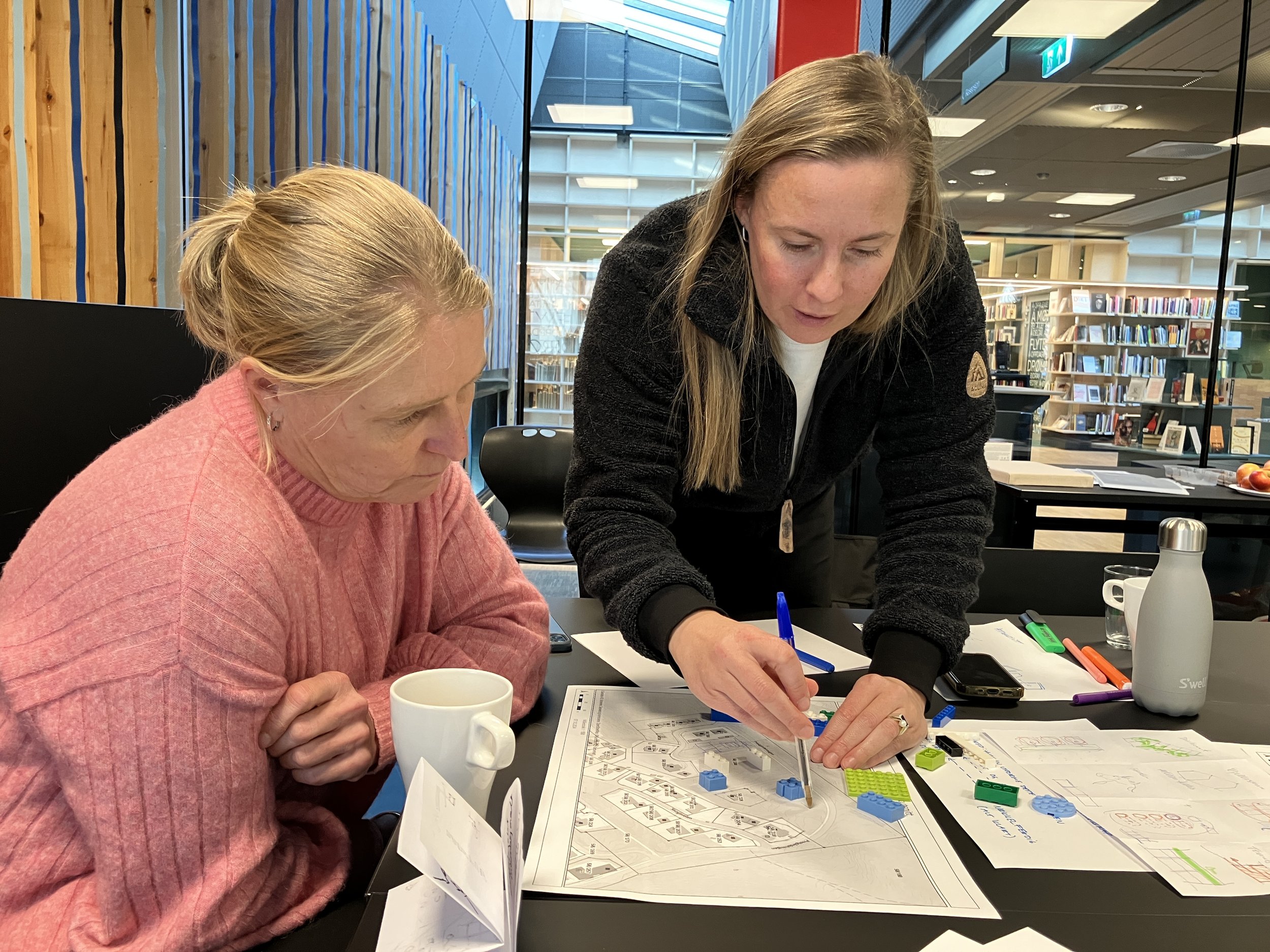
Concept 2 – Moving circle and flexible housing
This concept challenges the very structure of the housing and property system. The idea of a “moving circle” is about giving young adults the opportunity to establish themselves in simple, affordable housing – and later move on to larger units in the same area when their life circumstances change.
Another proposal is to build all homes with a fixed core – kitchen and bathroom – that can be easily expanded and built on over time. This way, the home can follow the resident through different life stages and needs.
Sharing solutions and co-use are central. Resources such as electric scooters, greenhouses and common areas can be shared between residents, and the business community can be involved through financing or collaboration. Companies that want to attract young employees can contribute to such housing projects and at the same time secure an attractive workforce. The concept thus points to a mutual cooperation between the municipality and the business community - where both parties strengthen each other through a more flexible and sustainable housing offer.
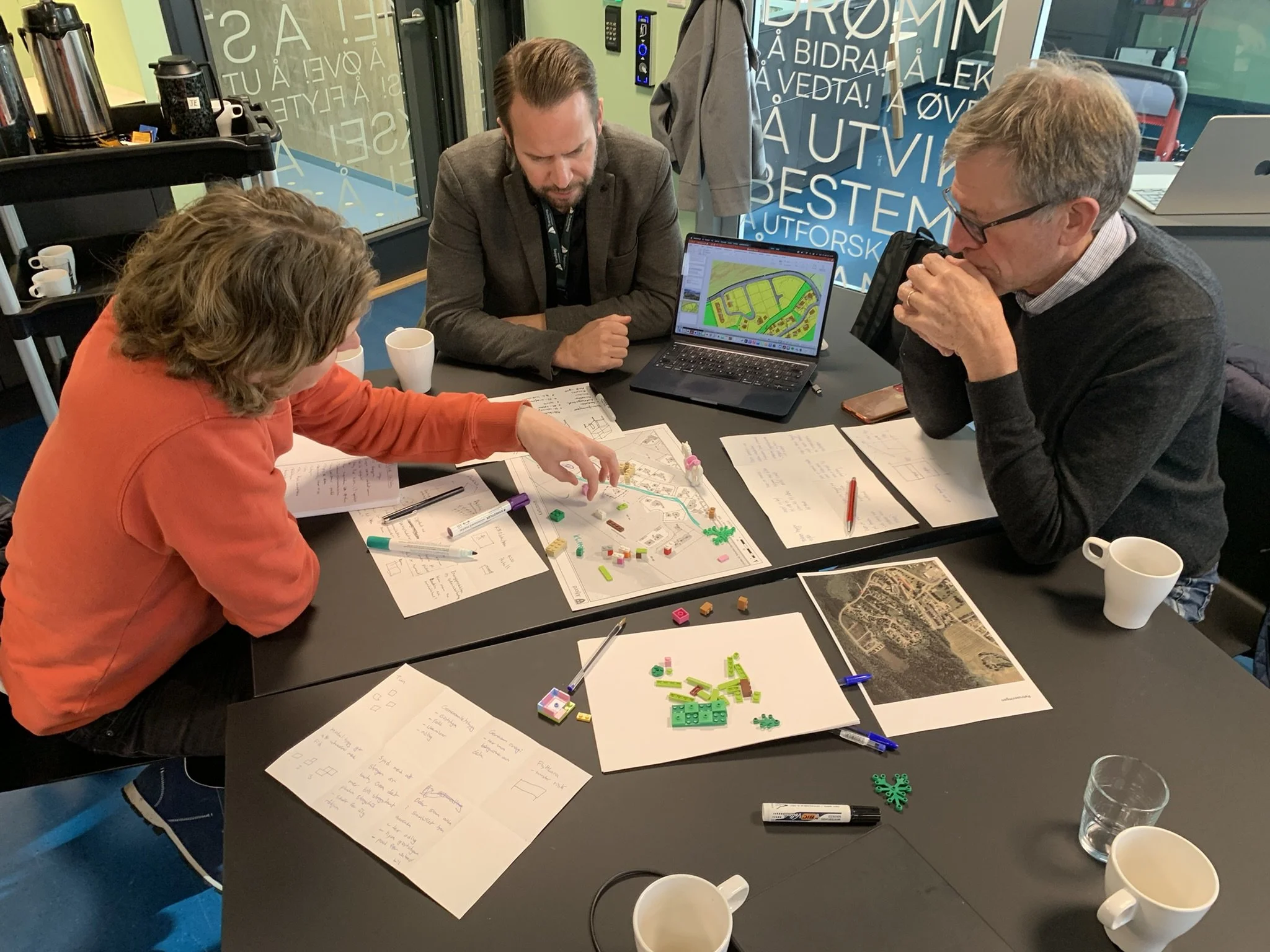
Concept 3 – Inclusive and participatory society
This concept is based on the need to understand why many young adults choose the city over the countryside. The answer lies partly in how to build belonging and community. Therefore, it is proposed to develop a holistic "ecosystem" around the project, where the municipality, business and local communities actively participate in the development.
A concrete proposal is to advertise homes that can be built at an affordable price – for example around 1.8 million kroner – and invite young people to be co-creators of their own living environment.
The homes are conceived as small, affordable and flexible units with low operating costs, complemented by communal areas and shared resources. Shared workspaces for young people working digitally can help to connect residents more closely together.
In short, the concept is about creating an inclusive and participatory local community, where both the process and the result are based on broad involvement, co-creation and local pride.
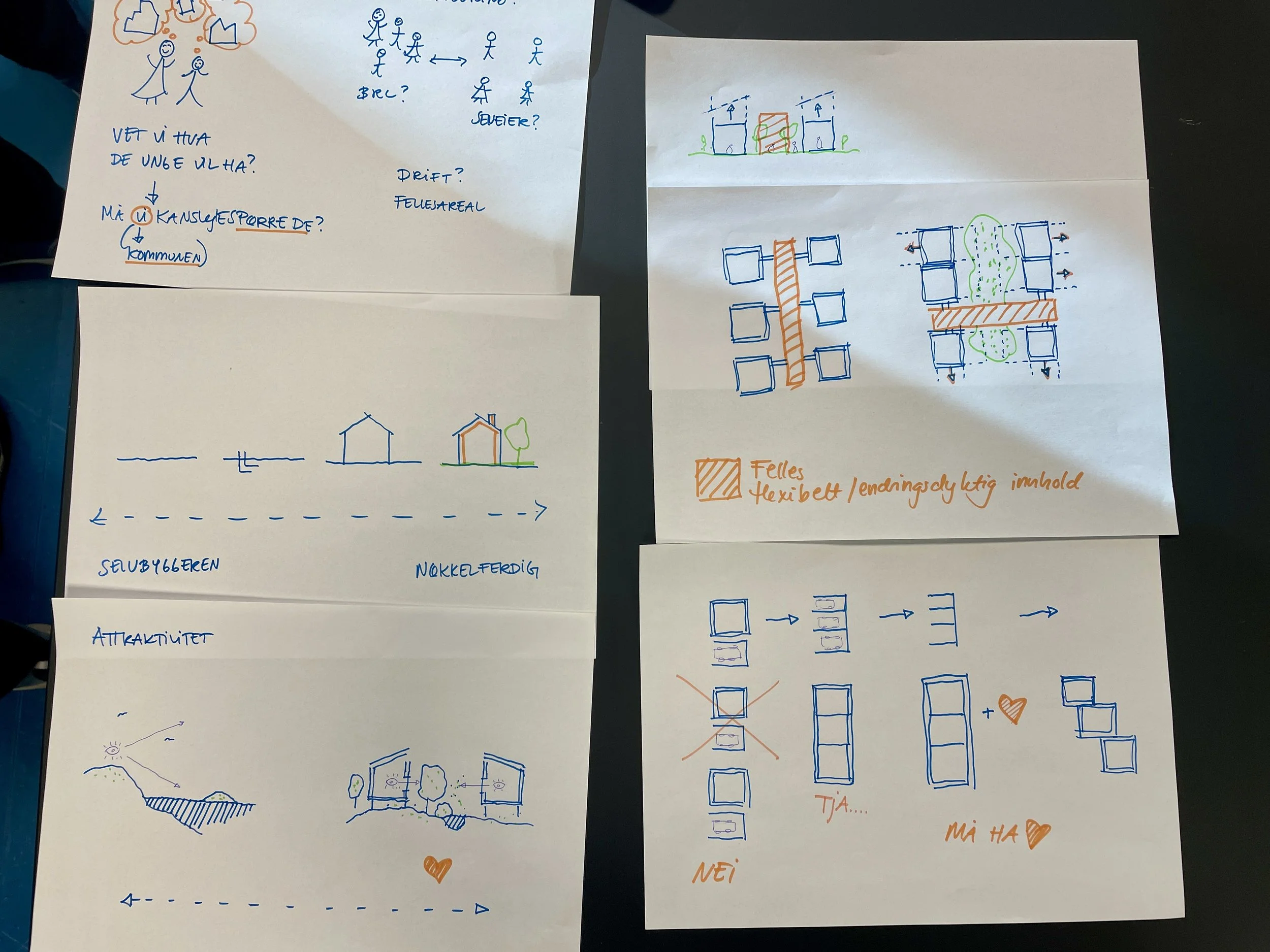
Summary
The pilot represents a transition from a traditional development model to a more relational, process-based and site-specific approach.
Overall, the project moves towards a regenerative development, where value creation is understood as more than economic growth, by creating long-term values for local communities and nature. This involves developing housing concepts that strengthen the site's social structures, mobilize local resources and facilitate new forms of collaboration and value creation.
Although the concepts presented different solutions, they point in the same direction. We bring together some important commonalities across the concepts:
Community and meeting places: Social arenas and shared functions create belonging and well-being
Flexibility: Housing should be adaptable to different life stages and financial constraints
Sharing economy: Shared solutions reduce costs and strengthen sustainability
Connection to business: Local businesses can contribute to the development and financing of new housing models
Involvement: Young adults must be involved in the early planning phase to ensure relevant solutions
New framework: The municipality should challenge traditional forms of housing and be a driving force for public-private collaboration between the municipality, business and the rest of the local community
The pilot – further work
Hear from Åfjord Utvikling how the project has developed.