
Nature-based solutions
This is the last module in the Nature-Based Solutions series. Here you will translate findings from mapping and condition assessment into a concrete package of measures with nature-based solutions. You prioritize according to the hierarchy of measures (avoid–reduce–restore/enhance), make necessary opt-outs and complete the Measure Card, Go/No-Go checklist and a simple management plan for facility–operation.
INSERT CHECKLIST
EXAMPLE
Topography adaptation (build in micro-terrain, minimal mass movement).
Ground/foundation (prioritize point/screw foundation where possible).
Roof drainage (direct water from roofs via rain beds/vegetated ditches – avoid rapid overloading).
Nature integration (preserve edge zones, native species, habitats).
Trees/shade/microclimate (comfort, energy, erosion protection).
Diffusion openness/insulation/materials (moisture-resistant, maintenance-friendly details).
Sparse stormwater management (open solutions before pipes/culverts).
Decision rule: The measures must respond to the condition : Intact → very gentle/no; Processed → limit + restore; Degraded → restore first + collect new features here.
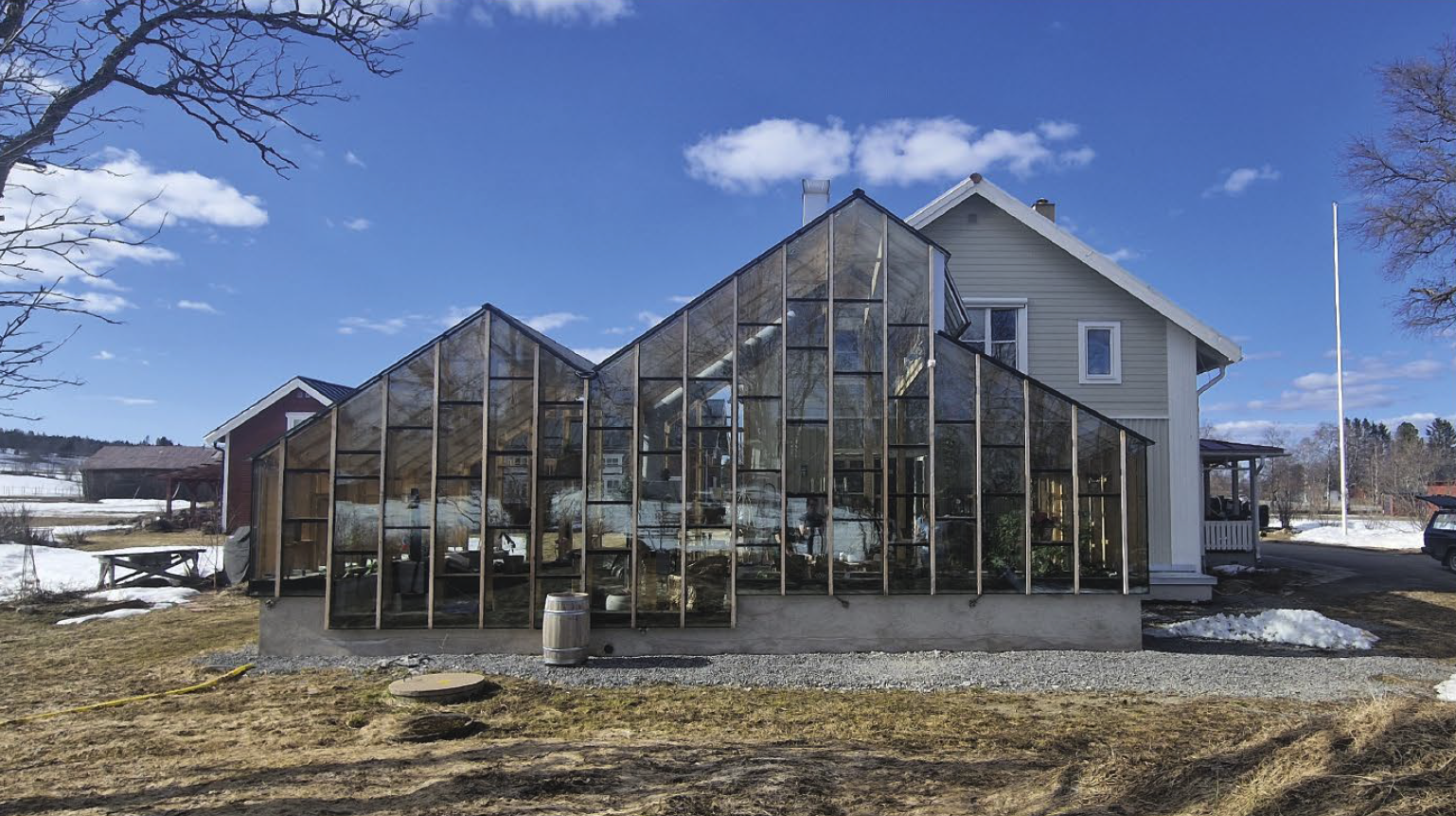
The Orangery, Fugelsta
What does the case show?
Small-scale natural materials and attention to detail; a good example for diffusion-open constructions and robust details.
This example emphasizes that material and detail selection is part of the NBL package (moisture balance, maintenance, indoor climate).
What can be transferred?
Choose layers that are open to diffusion (wood/wood fiber/clay) and control moisture with breather valves instead of a tight barrier.
Prioritize overhangs and roof overhangs; direct roof water to open solutions (rain beds/recesses).
Good examples
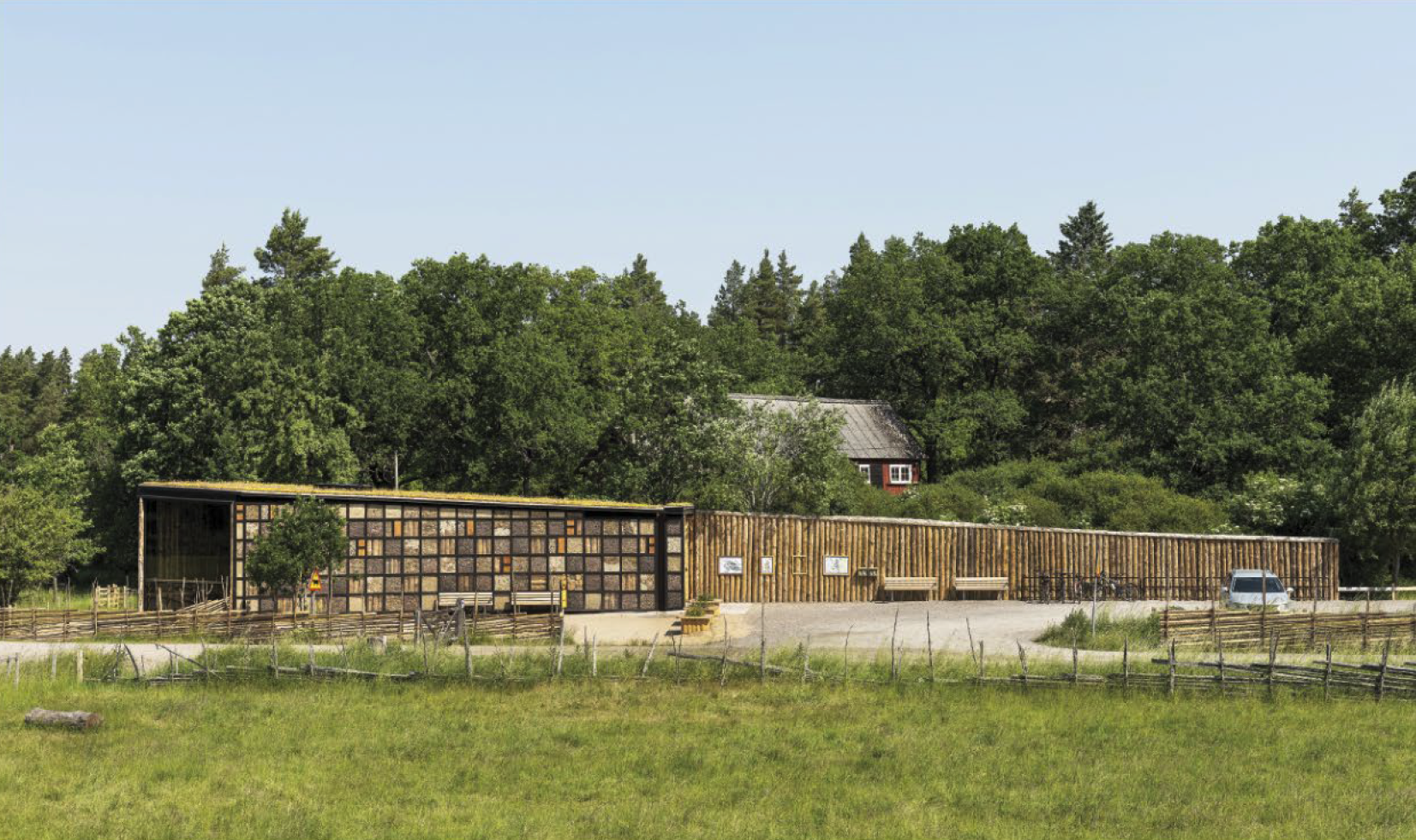
Tinnerö Entrébyggnad & insect hotel (Linköping)
What does the case show?
Integration of buildings and biodiversity: small volumes, natural materials and measures for insects/species in direct connection with the building.
The case shows how nature integration becomes an explicit design requirement – not just a finishing touch.
What can be transferred to holiday home fields?
Set aside edge zones and establish small habitats (dead wood, insect hotels, flower meadows) at communal functions.
Link measures to operation/maintenance (strategy plan for establishment and follow-up).
Questions that should be discussed/illuminated in the project
Location: Are the measures located where the water and terrain "want" them to be located? (open chain before road/VA).
Intervention: Can foundations/routes be made reversible and with minimal mass movement?
Biodiversity: What nature integration measures are included as operational obligations (maintenance, inspection)?
Material/moisture: Are climate walls open to diffusion and the details moisture-resistant?
Stormwater: How is roof runoff (peat/sheetrock – consequences) handled and where does the water end up?
Grey areas: Are technical functions (parking/energy/VA) concentrated on disturbed areas?
Scale: Do the measures work at the right level (plot/sub-area/field/landscape)?
Proposal for role distribution (with deliverables)
SME (developer/contractor)
Action cards per action (purpose, location, "do this", care, operation/maintenance, connection to ecosystem services).
Phase plan (facility → establishment maintenance → operation) including season/access.
Go/No-Go checklist completed before construction begins.
Municipality/administration
Requirements/guidance for corridors, consideration zones and measurement/monitoring, as well as acceptance of opt-outs.
Expected documentation of stormwater and nature integration in applications.
Subject matter experts (biologist/hydrologist/landscape architect/building physics)
Principle sketches for open waterway and topography adaptation; dimensioning/risk.
Review of moisture/diffusion and material selection; detailing of roof drainage/roofing.
Questions to ask and work on in the project
Can the building's footprint and size be reduced to minimize encroachment and resource use?
Is it possible to choose a flexible and movable building solution, which can be dismantled without leaving any lasting traces?
Is the measure reversible – can it be removed or reversed without lasting damage to nature?
Can you avoid a cast-in-place slab on ground, and instead use point foundations, screw foundations or piles?
Can the building have green roofs or walls with native plants that enhance natural values?
Is it possible to use untreated, natural wood or environmentally certified materials without harmful substances?
Can you avoid plastic and composite materials on the outside, which contribute to microplastics in nature?
Is it possible to insulate with natural materials such as linen, hemp, wood fiber or cellulose?
Can garages and sheds be avoided – and instead be solved with shared solutions outside of natural zones?
Can you avoid blasting and major terrain intervention by considering alternative locations or construction methods?
Is it possible to place buildings and infrastructure in line with natural terrain lines and vegetation belts?
Can trees, shrubs and edge vegetation around the construction area be spared and preserved?
Can you use only native plant species and avoid alien species in planting and revegetation?
Can you do as little terrain work as possible, and rather build in line with nature's micro-terrain?
Are the building materials you choose low-emission, biodegradable or part of circular solutions?
Have you mapped wildlife movements and are you avoiding creating barriers for game, grazing animals or small animals?
Can you facilitate shared use and sharing of functions such as patios, sauna, storage and kitchen?
Is the roof water planned so that it flows into rain beds or natural vegetation, instead of pipes?
Can water and sewage solutions be solved easily, with minimal digging – for example, with biological toilets and greywater filtration?
Can you avoid ditching and draining of marshlands and wetlands, which have important carbon and water functions?
Are low mountains or alpine areas avoided as construction sites due to low resilience and recovery capacity?
Are areas set aside for natural re-establishment and free development of nature?
Are hiking trails and access roads adapted to the terrain, with gentle curves rather than straight lines and mass movement?
If a road is necessary – can the width and number of lanes be minimized?
Can the building be low and small – both out of consideration for nature and visual impact?
Can energy solutions and waste solutions be organized as joint initiatives – such as solar cells, compost or recycling points?
Has a management plan been created for the area so that nature can return after the construction phase?
Can construction activities be postponed to winter to avoid soil compaction and damage to vegetation?
Have you mapped snow and avalanche conditions, and considered a location that does not interfere with natural snow drift?
Are measures per plot limited – so that expansions with terraces, sheds and annexes do not gradually weaken the nature?
Can road ditches and associated areas be restored and returned to their natural state?